Mold Removal in Henderson, NV
Henderson started in 1941 as the company town for the Basic Magnesium plant and incorporated on April 16, 1953, with about 7,500 people. The 2020 census counted 317,610, which makes it Nevada's second-largest city, and almost all of that growth came after 1978 as stucco-and-tile subdivisions spread from Green Valley south to Anthem and west to Inspirada. The city sits at about 1,870 feet in the Mojave, averages under six inches of rain a year, and runs the air conditioning from May into October.
That combination shapes where mold shows up. Houses here are slab-on-grade with the water heater in the garage and the air handler in the attic or the garage, so the water that feeds growth comes from a tank, a supply line, a condensate drain, or a tile roof in a monsoon storm, and it goes sideways into drywall with nowhere to drain.
Homeowners in Henderson reach an independent local mold provider through this site's phone line. That provider meters the house and tells you what it needs. We only set up the call.
Henderson mold removal, from the garage wall to the attic
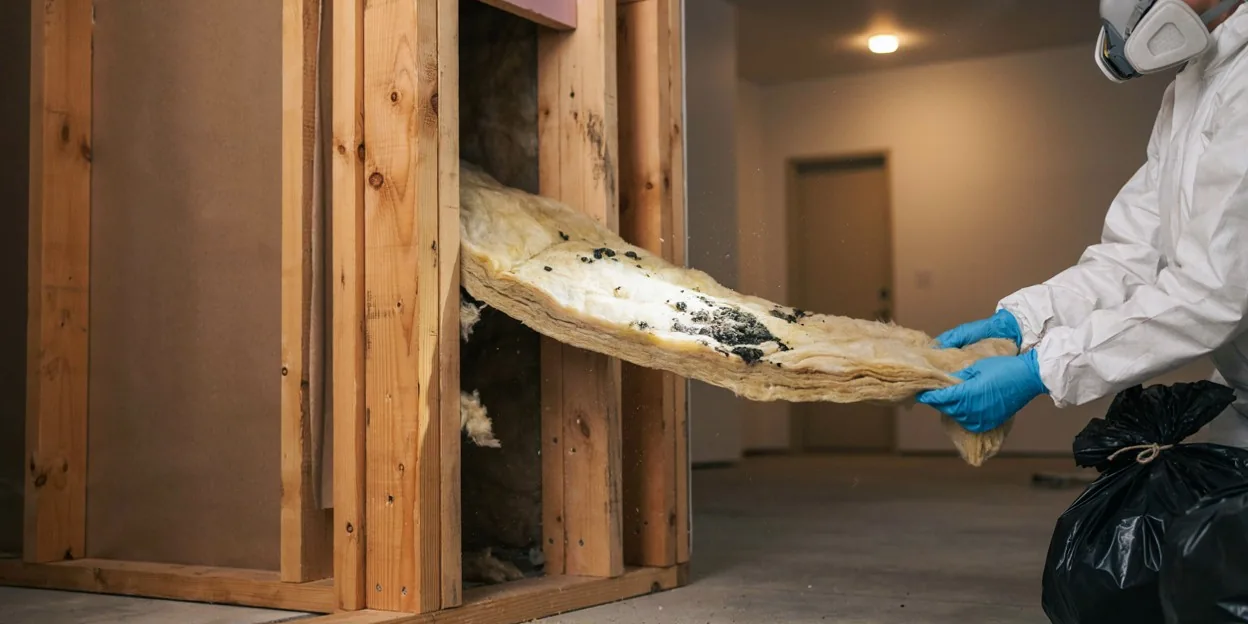
A soft baseboard on the wall shared with the garage water heater is the most common Henderson call, and it is mold removal: the crew meters both sides, seals the hall, and cuts to the reading. A sour smell each time the air handler starts in July is HVAC mold cleaning. A brown ring on the ceiling after an August storm is attic mold remediation, with the tile underlayment fixed before the sheathing is treated.
Who runs the water, and where the city plays hockey
The city's own Utility Services department delivers the water and reads the meters, and an unexplained jump on the bill is the first clue to a slab leak in a house that shows no puddle. A few blocks from the old townsite, Lee's Family Forum on Green Valley Parkway is the arena that opened in 2022 for the city's hockey team, on land that was a shopping mall when Green Valley was new.
Call (702) 602-8512 and describe the leak and the growth. We put you through to a local mold provider serving Henderson.
Services Available in Henderson
Mold Removal
Growth on drywall behind a water heater, a fridge line, or a slab leak: room sealed, wet board cut to the meter line, framing HEPA-cleaned and dried.
Black Mold Removal
A dark patch handled by how far the water traveled, not its color: containment, porous material out, hard surfaces cleaned, leak fixed before closing.
Whole-Home Mold Remediation
A slab leak or a supply line that ran for weeks while the house sat empty, mapped room by room and cleared in zones as one project.
HVAC Mold Cleaning
Coil, drain pan, and condensate line cleaned or replaced when the air handler in the garage or attic sweats through a 110-degree summer.
Bathroom Mold Removal
Growth behind a vanity, under a shower pan, or on a ceiling with no fan, removed with the supply line or drain leak fixed first.
Attic Mold Remediation
Growth on roof sheathing under slipped tile or around a sweating duct, cleaned and treated once the underlayment or the insulation is fixed.
Mold Odor Removal
A musty smell in a house that looks fine, traced to the wet material under the laminate or behind the cabinet, then removed and treated.
Mold Damage Repair
Drywall, texture, baseboard, and cabinet bottoms put back after removal, once the slab reads dry and the leak that started it is repaired.