Mold Removal in Green Valley, NV
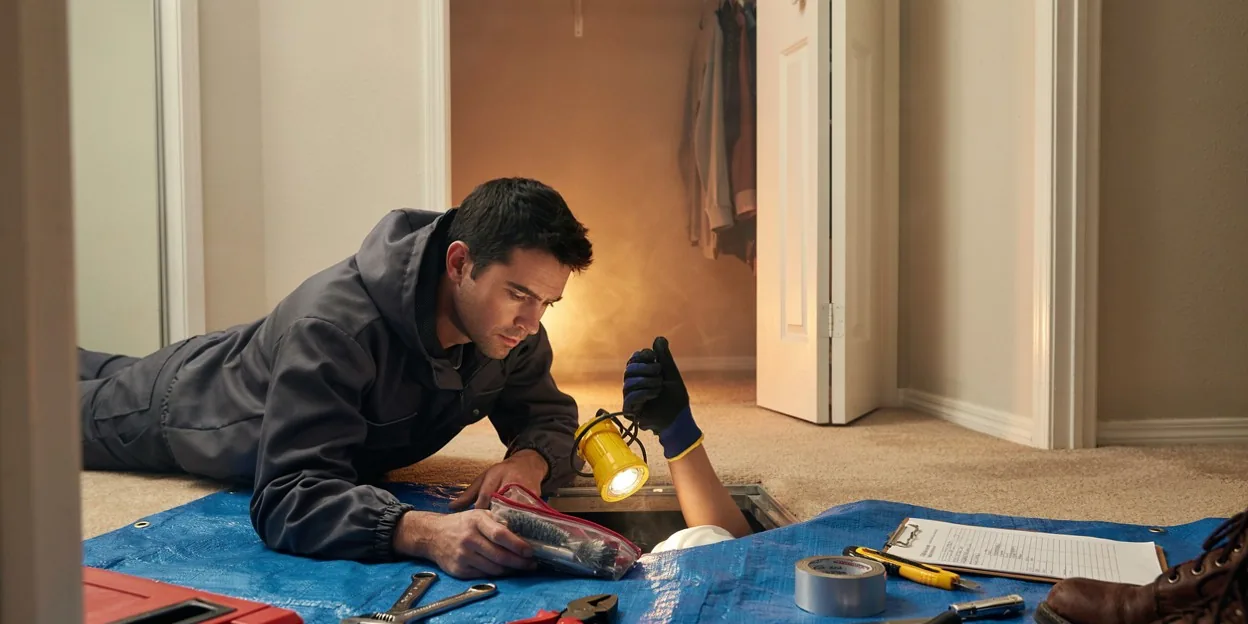
Green Valley opened on October 24, 1978, as Southern Nevada's first master-planned community, laid out by American Nevada Corporation on 8,400 acres of Henderson desert. Green Valley North came first, Green Valley South started around 1985, and Green Valley Ranch followed in 1994, so the houses run from late-1970s single-story stucco to mid-1990s two-stories, all on slabs, almost all under tile.
The oldest of them are pushing fifty. Their water heaters have been replaced two or three times, the copper under the slab is original, and the concrete tile roofs still look fine while the underlayment beneath them has been cooking since the Carter administration. That is where Green Valley's mold starts: a slab line, a tank, or a roof that finally let a monsoon cell through.
Homeowners in Green Valley reach an independent local mold provider through this site's phone line. That provider meters the house and tells you what it needs. We only set up the call.
Green Valley mold removal in the first houses Henderson planned
A soft baseboard on the wall behind a garage water heater is mold removal. A brown ring on a bedroom ceiling after a storm, over a roof that has never been redone, is attic mold remediation. A master bath with a fan that vents into the attic and a ceiling that keeps spotting is bathroom mold removal.
The chocolate factory in the cactus garden
Green Valley's oldest landmark is the Ethel M Chocolates factory on Cactus Garden Drive, with a botanical cactus garden outside that draws the neighborhood every December, and it has been there nearly as long as the first houses.
Call (702) 602-8512 and tell us what you see. We put you through to a local mold provider serving Green Valley.
Services Available in Green Valley
Mold Removal
Growth on drywall behind a water heater, a fridge line, or a slab leak: room sealed, wet board cut to the meter line, framing HEPA-cleaned and dried.
Black Mold Removal
A dark patch handled by how far the water traveled, not its color: containment, porous material out, hard surfaces cleaned, leak fixed before closing.
Whole-Home Mold Remediation
A slab leak or a supply line that ran for weeks while the house sat empty, mapped room by room and cleared in zones as one project.
HVAC Mold Cleaning
Coil, drain pan, and condensate line cleaned or replaced when the air handler in the garage or attic sweats through a 110-degree summer.
Bathroom Mold Removal
Growth behind a vanity, under a shower pan, or on a ceiling with no fan, removed with the supply line or drain leak fixed first.
Attic Mold Remediation
Growth on roof sheathing under slipped tile or around a sweating duct, cleaned and treated once the underlayment or the insulation is fixed.
Mold Odor Removal
A musty smell in a house that looks fine, traced to the wet material under the laminate or behind the cabinet, then removed and treated.
Mold Damage Repair
Drywall, texture, baseboard, and cabinet bottoms put back after removal, once the slab reads dry and the leak that started it is repaired.